Blog
What’s the Difference Between a Tuxedo and a Suit?
This article has been researched and written by Ariana Amarnani. AI has not been used in producing this article.
A tuxedo is not a suit, and a suit is not a tuxedo. While they may appear similar at first glance, the difference lies in the finer details — from fabric and construction to styling and occasion.
Whether you’re preparing for your wedding day or another important event, understanding the distinction between a bespoke tuxedo and a bespoke suit will help you make the right choice and ensure you look your absolute best.
Pair what you wear with the tone of the event
The term ‘double-breasted’ refers to a coat or jacket with two parallel columns of buttons and overlapping front flaps. The typical double-breasted jacket has one to four rows of buttons, but only one or two of these rows are functional. A ‘number-on-number’ structure is used to describe the construction of a specific jacket (the first number refers to the total number of buttons and the second number refers to the number of fastening buttons below the lapel). Traditionally, double-breasted jacket lapels are peaked, and the left lapel fastens over the right.
The origins of the double-breasted jacket
A suit or tuxedo is worn based on the formality, time of day, and purpose of your event. Tuxedos are worn at formal evening events (i.e., “blick tie” events). Bespoke tuxedos can be worn to celebratory events, such as weddings, galas, or other formal gatherings. You would not wear a tuxedo to a funeral.
A suit is known as semi-formal or casual attire. It can be worn to events both during the day or night. They can be worn to any event, and fashioned in color and style to match the tone and setting of your event. For example, a bespoke suit for a wedding can be custom crafted from lightweight fabrics in a fashionable or bold color.
When it comes time to choose between a tuxedo or a suit, be sure to know whether or not your event is formal, informal, or casual.
The fabric
One of the defining differences between a tuxedo and a suit lies in the fabric detailing.
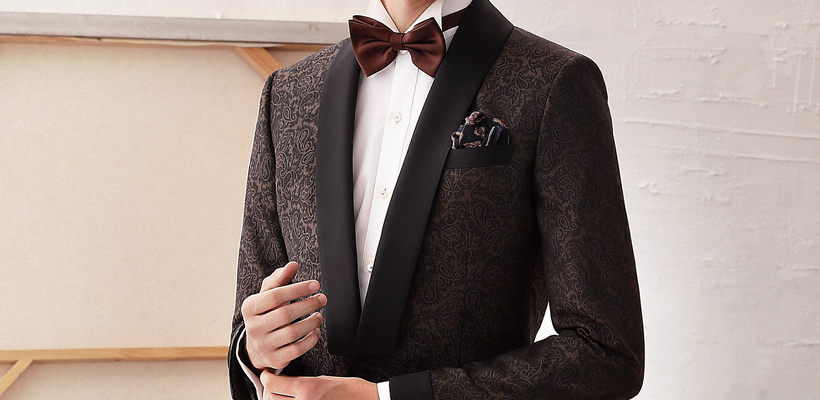
A tuxedo is distinguished by its use of satin elements. These typically include satin-faced lapels, satin-covered buttons, and a satin stripe running along the outer seam of the trousers. These subtle details create a more formal and luxurious aesthetic.
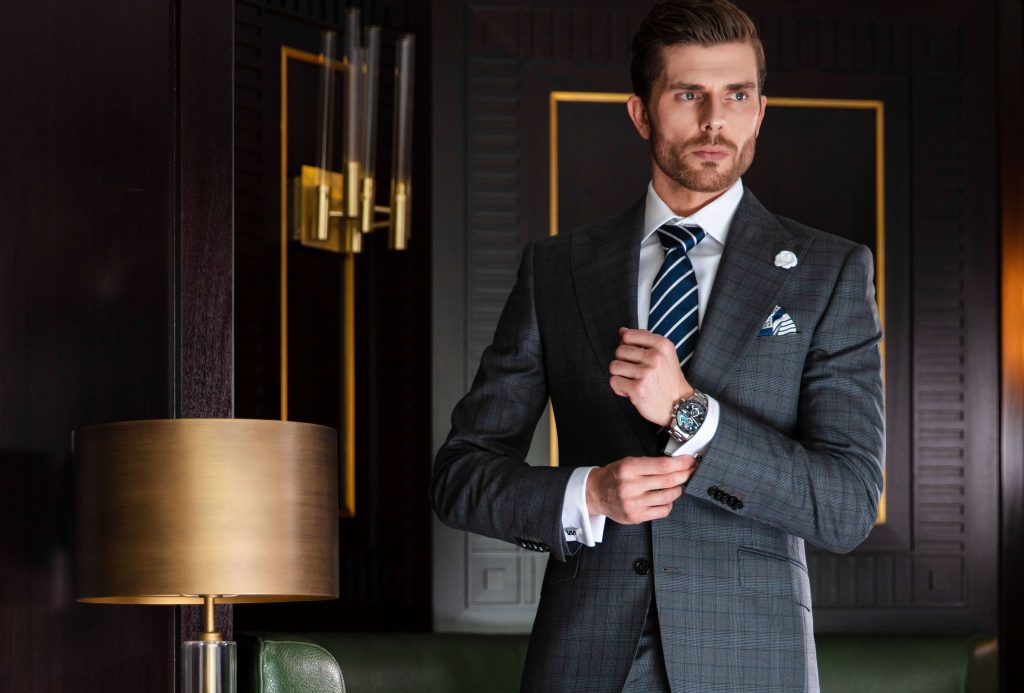
A suit, by contrast, is usually crafted entirely from a single fabric, without satin accents. Buttons are often made from horn, plastic, or fabric-covered materials. This gives the suit a more understated and versatile appearance.
With bespoke tailoring, you have complete control over these elements — from fabric selection to lapel style — ensuring your garment reflects both the occasion and your personal taste.
Accessories and shoes
Tuxedos and suits have different accessories. Classic tuxedo accessories include a waistcoat, suspenders, cummerbund, white pocket square, a bowtie, and cufflinks (when applicable). However, modern tuxedos do not always include these traditional accessories. Suits are more versatile than tuxedos and depending on the accessories they can be dressed up or down. Suits can be worn with or without a vest, with long ties, or with bowties.
Tuxedos are worn with white shirts that have either a wing collar or a turndown collar. They are worn with trousers that match the tuxedo jacket and are paired with black patent shoes. Alternatively, a suit can be worn with a variety of dress shirts, in a solid color or pattern. Suits can be matched with trousers that match the jacket or coordinate in color, and they paired with oxfords, loafers, or slip-on shoes. Unlike tuxedos, suit pants always have belt loops.
Differences between a tuxedo and a suit
| Tuxedo | Suit |
| Typically fashioned in the classic colors of black or midnight blue. | Can be fashioned in classic colors of black, midnight blue, or grey or in any color to match the tone of the occasion. |
| Worn at formal events only at night. | Worn at formal events during the day or night. |
| Bowtie only. | Necktie or bowtie. |
| Peaked lapels or shawl collar. | Notched or peaked lapels. |
| Facings on lapels, pockets, buttons, and outseams. | No facings. |
| Paired with a white shirt with bib and French cuffs. | Can be worn with any formal shirt. |
| One button for a single-breasted tux, 6×2 for a double-breasted tux. | Any button stance. |
| Plain front on trousers. | Pleated or plain front on trousers. |
| Plain bottom trousers. | Plain or cuffed trousers. |
Collars & Cuff Bespoke Tuxedos and Bespoke Suits
At Collars & Cuffs, we take pride in combining decades of craftsmanship with a truly immersive and one-of-a-kind sartorial experience. Designed and crafted by master tailors with over twenty years of experience, our bespoke tuxedos and suits are entirely customizable to your personal taste, body, style, and personality.
The C&C process begins with our client concierge introducing you to the world of bespoke styles and fabrics and ends with an impeccably tailored suit that speaks to your exact taste and fits your body perfectly. Requiring up to 50 hours from start to finish, a fully bespoke suit is handmade and takes a minimum of 2-3 weeks to complete. During this time, the client will be invited for fittings where he will try on the suit while it’s being made.
For added convenience, we also offer a travelling tailor service, bringing the full bespoke menswear experience directly to your home or office.
Contact a member of our team to schedule your complimentary appointment.